Rocket Yoga: The most Complete 2024 Guide
| Author: |

|
David Adame |
| Reviewed by: |

|
David Lertsin |
What is Rocket Yoga? Rocket Yoga, also known as “The Rocket,” is a dynamic and invigorating style of yoga that combines traditional Ashtanga yoga with elements of creative vinyasa yoga flow. Rocket Yoga is divided into three different sequences based on the series of Ashtanga Vinyasa Yoga.
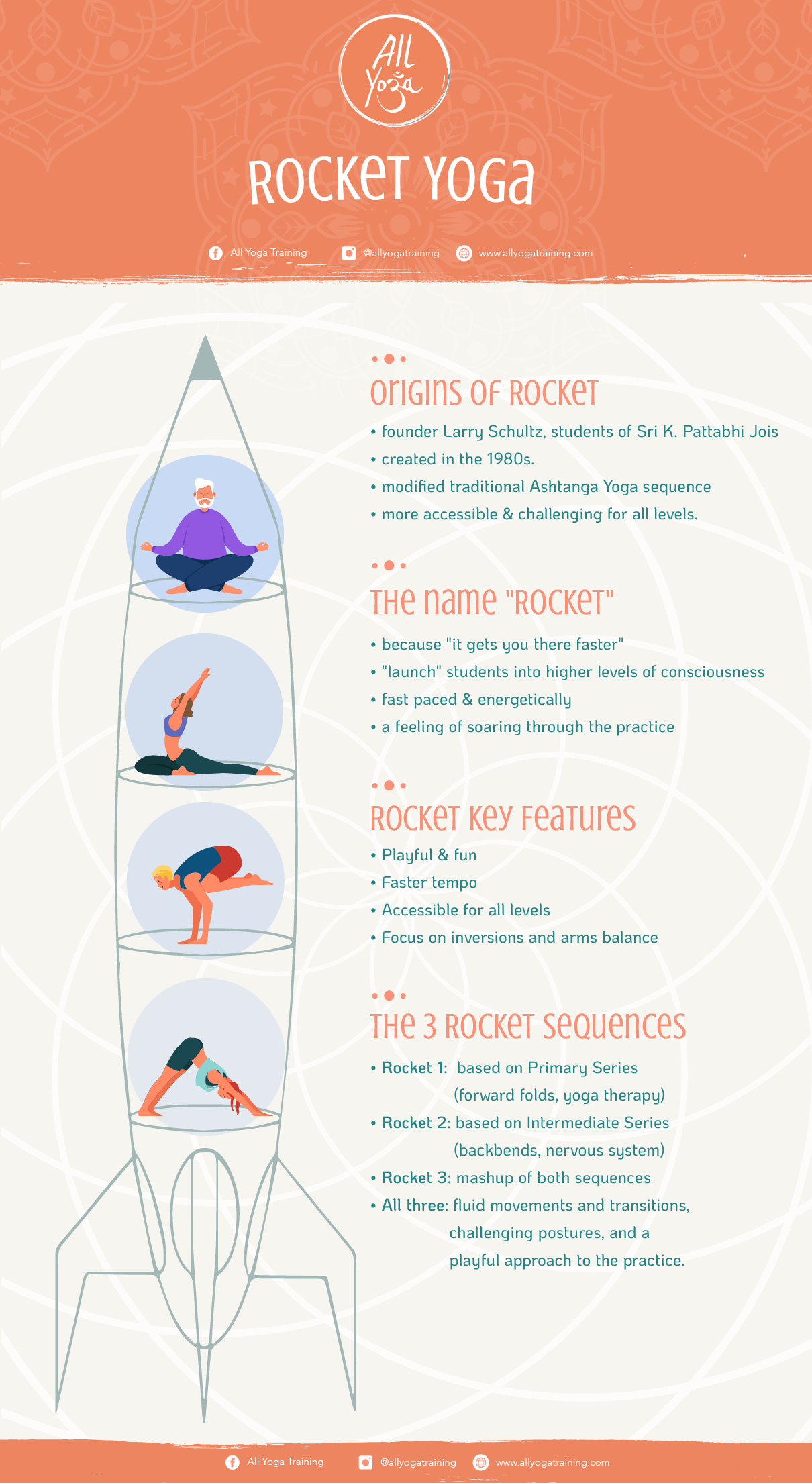
This unique power yoga style was created by Larry Schultz, a student of Pattabhi Jois, the founder of Ashtanga yoga.
| Table of Content | |
|---|---|
| 1. | Who is Larry Schultz? |
| 2. | Origin of Rocket Yoga |
| 3. | Key features |
| 4. | The Rocket Yoga Sequences |
| 5. | Rocket Yoga System |
| 6. | Rocket Yoga Benefits |
| 7. | Tips for Beginners |
| 8. | Rocket Yoga FAQ |
| 9. | Rocket Yoga Infographics |
| 10. | Conclusion |
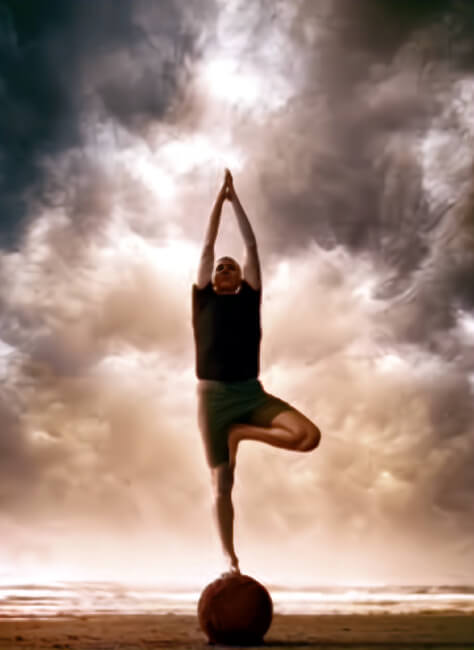
Larry Schultz: the Rocket Yoga founder
Larry Schultz, also known as “the father of Rocket Yoga,” was a dedicated student of Pattabhi Jois, the founder of Ashtanga Vinyasa Yoga. Schultz began his yoga practice in the 1970s and quickly fell in love with the Ashtanga method. He went on to become one of Jois’ most dedicated and accomplished students.
In the 1980s, Schultz began to experiment with the Ashtanga series, adding new poses and modifications to the practice. He also began to incorporate elements of vinyasa flow, a style of yoga that emphasizes movement & breath, but being more creative. The result was to become the Rocket Yoga style, a dynamic and invigorating yoga practice that quickly gained popularity among yoga students.
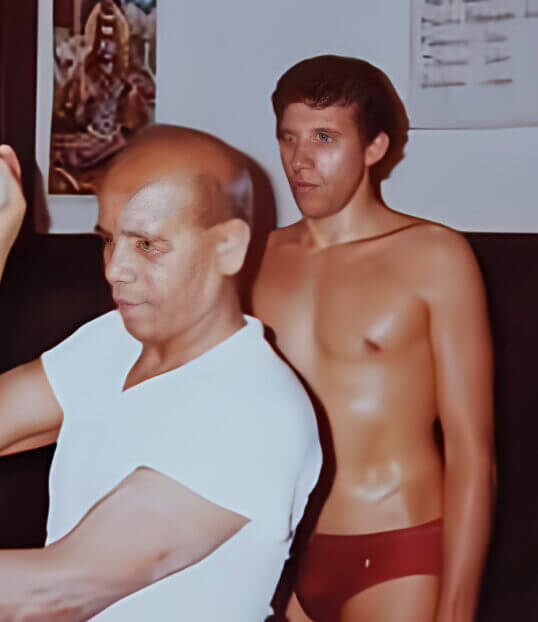
Rocket Yoga’s origin
In the mid 1990s, Larry Schultz traveled on tour with the Grateful Dead as the band’s personal yoga teacher. He spent a lot of time in hotels and had to find ways to entertain himself. Bored in his hotel room, practicing on his own, he came up with a highly creative, highly accessible version of Ashtanga Vinyasa, later named Rocket Yoga.
Why the name “Rocket Yoga”?
The “Rocket” name comes from Bob Wier, the famous guitar player from the iconic rock band “The Grateful Dead”. After one of the classes, Bob asked Larry Shultz: “How do you call this yoga sequence? It’s great!”. Larry replied that he did not have a name for it; he just loved to teach it. Bob Wier then said to Larry that he should call it “The Rocket!” Larry asked why, and Wier replied, “because it gets you there faster!!” And it stuck instantly. Larry joked he never knew where “there” was… but the Rocket would take you there faster anyway.
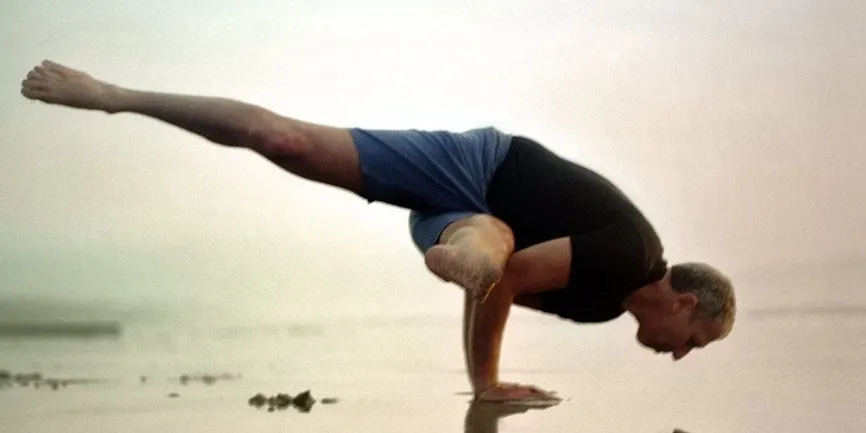
Rocket Yoga Key features
- Rocket Yoga Key Features Summary:
- Playful and fun
- Faster Tempo
- Accessible for all levels
- Focus on inversion and arms balance
- 3 sequences based on Ashtanga Vinyasa Yoga

More playful with Faster Tempo
While the traditional method of Ashtanga Yoga focuses on long and slow ujjayi breath, Rocket Yoga is a bit more upbeat. While we keep the Ujjaji Pranayama breathing and five breaths per pose, the count is a bit faster. It makes the practice more fun while keeping the meditative aspect of the breath. Rocket Yoga becomes like a dance or a moving meditation.

Rocket Yoga Inversions
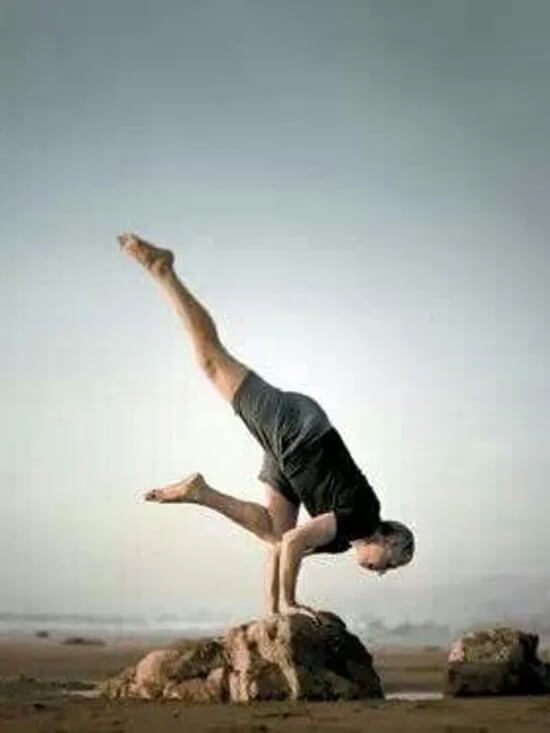
One of the main features of Rocket Yoga is its emphasis on inversions, such as headstands, handstands, and elbow stands. These fun and challenging poses have many benefits for the body, including increased blood flow to the brain, improved circulation, and a boost to the immune system.
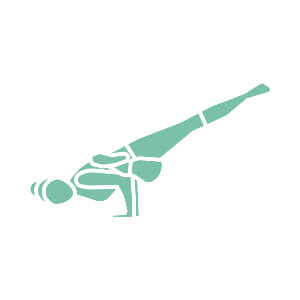
Arms Balances
Another unique aspect of Rocket Yoga is the use of “flying” poses. These are a series of arm balances and transitions designed to build strength, flexibility, and coordination in the upper body. These flying poses are a lot of fun and can be a great way to build confidence and self-esteem.
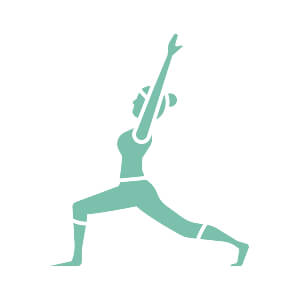
Accessible for all levels
Arm balances and inversions can be challenging, but they don’t have to be out of reach for those who have never practiced. This is the beauty of the Rocket sequence. With proper guidance and modifications, arm balances are accessible to everyone. With patience and consistency, anyone can develop the skills to practice safely and effectively.

Music
One other important element of Rocket Yoga is music. Music is a powerful tool in a yoga practice to create a specific atmosphere. It helps to create a fun and dynamic vibe to stay energized and focused. Generally, the playlist will be more upbeat and energetic than a regular yoga class, mixing different genres such as rock, hip-hop, electronic, and world music. The music keeps the energy high and supports students to maintain a steady pace throughout the practice.

In my experience of the empowering flow of Rocket Yoga, I find myself transcending limitations, embracing vulnerability, and harnessing inner strength. As I synchronize my breath with each challenging movement, I am reminded that the journey is as much about the exploration within as it is about the physical asanas. Rocket Yoga gifts me a renewed sense of freedom and possibility. It’s the perfect complement of my Yin practice
Annie Au Yoga, Founder of Soulful Yin YogaThe Rocket Yoga Sequences
Warm-up sequence
Same as the traditional Ashtanga Vinyasa Yoga method, the Rocket Yoga practice begins with the sun salutations sequence, to help prepare the body for the more intense poses that are to come. Usually, we will do 3 rounds of Sun Salutation A followed by 3 rounds of Sun Salutation B. It’s recommended to simply walk back for the sun A rounds and start to jump back from the sun salutation B.
Rocket Yoga Launching sequence
Right after the last sun salutation B, student will get the first taste of Rocket Yoga with the launching sequence. This little vinyasa flow set the pace and vibe for the rest of the rocket practice. It starts with chair pose, move to half chair pose and from there the first arm balance: Bakasana or crow pose. From there. we jump back to chaturanga for a vinyasa and to initiate the standing sequence of the Rocket. Check the video in the next section for a demonstration of the launching sequence.
Rocket Yoga Standing Poses
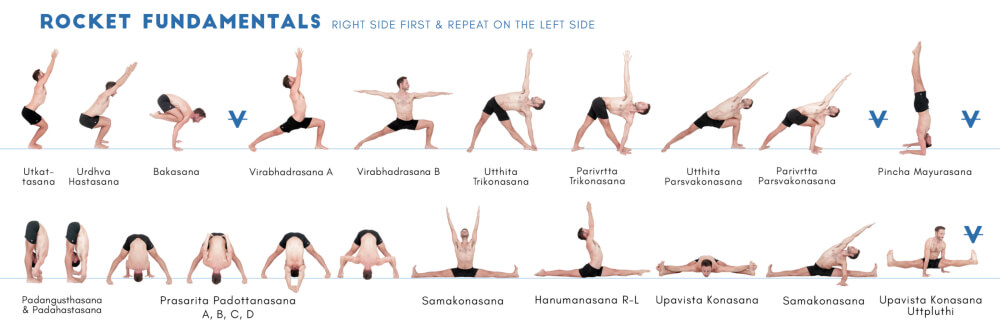
The practice then moves on to a launching sequence linked to a series of standing poses, such as warrior poses and triangle poses. That helps to build strength and balance in the legs and core.
Rocket Yoga 1 Sequence
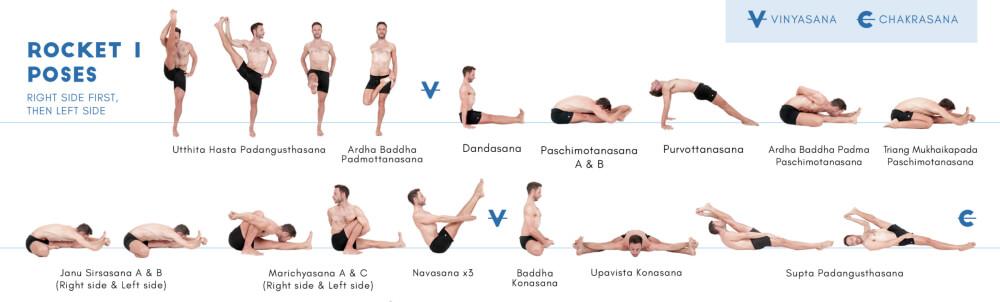
Rocket 1 is based on the Ashtanga Primary Series. A big focus is on forward folds, lengthening and strengthening the hamstrings.
| Name | |
|---|---|
| 1. | Dandasana |
| 2. | Paschimottanassana A and B |
| 3. | Purvottanasana |
| 4. | Ardha Baddha Padma Paschimottanasana |
| 5. | Trianga Muknaipada Paschimottanasana |
| 6. | Janu Sirsasana A and B |
| 7. | Marichyasana A and C |
| 8. | Baddha Konasana |
| 9. | Upavista Konasana A an B |
| 10. | Supta Konasana |
| 11. | Supta Padangustasana A and B |
| 12. | Ubhaya Padangustasana |
| 13. | Setu Bandhasana |
| 14. | Urdhva Dhanurasana |
| 15. | Paschimottanasana |
| 16. | Eka Pada Raja Kapotasana |
| 17. | Gomukasana |
Rocket Yoga 2 Sequence
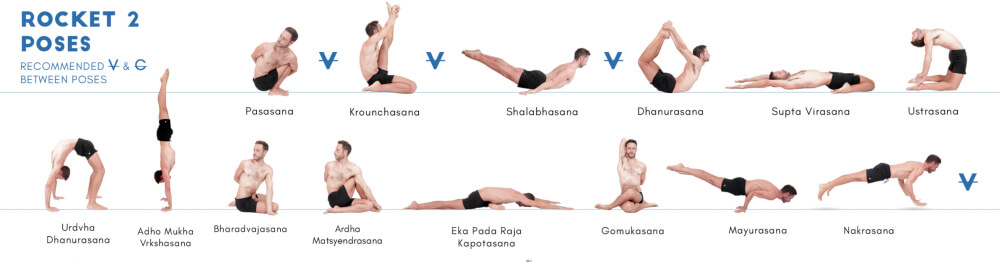
Rocket 2 is based on the Intermediate Series with a focus on spinal extensions to stimulate the nervous system. Larry Schultz like to joke about Rocket yoga 2 sequence by saying: “90 min classes, 90 poses! That’s the Rocket!”
| Name | |
|---|---|
| 1. | Pasasana |
| 2. | Krounchasana |
| 3. | Salabhasana |
| 4. | Dhanurasana |
| 5. | Supta Virasana |
| 6. | Ustrasana |
| 7. | Balasana |
| 8. | Kapotasana A and B |
| 9. | Urdhva Dhanurasana |
| 10. | Handstand |
| 11. | Straddle Handstand |
| 12. | Pincha Mayurasana |
| 13. | Bharadvajasana |
| 14. | Ardha Matsyendrasana |
| 15. | Mayurasana |
| 16. | Nakrasana |
Rocket Yoga 3 Sequence
Rocket 3 is a combination of 1 and 2. Rocket 3 doesn’t imply it’s more advanced, it simply contains parts of Rocket 1 and 2 and as per the Rocket philosophy it should always remain accessible
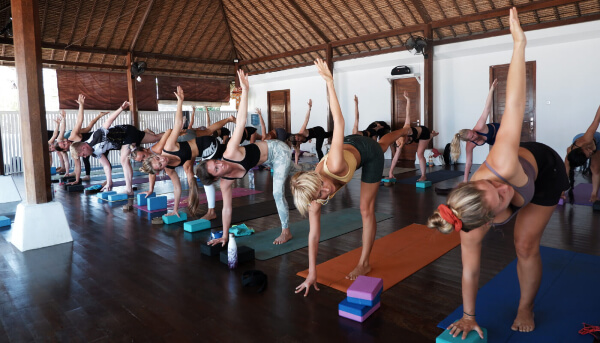
Finishing poses
The practice concludes with a series of inversions and relaxation poses, such as headstands, shoulder stands, yoga mudra, padmasana and savasana. This helps to release tension from the body and calm the mind.
Important Note
Unlike the strict sequence of Ashtanga Vinyasa Yoga where each pose as a precise order, Rocket Yoga is more fluid and playful. The Rocket Yoga Teacher can add his own flavor to the sequence by adding more poses and variations. Each Rocket Yoga class will have a different vibe, keeping the practice fresh and interesting.
Get Your Free Rocket Yoga Bundle
- Rocket Yoga Ebook
- Rocket Yoga tutorial videos
- Complete Rocket Yoga Sequences
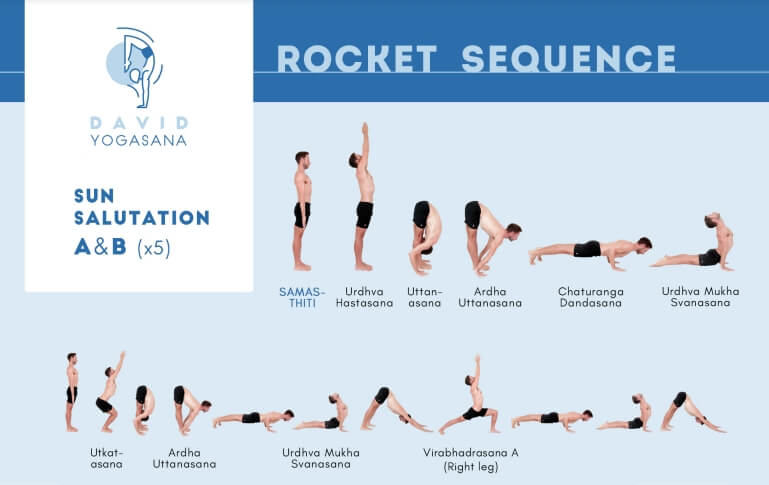
Rocket Yoga System
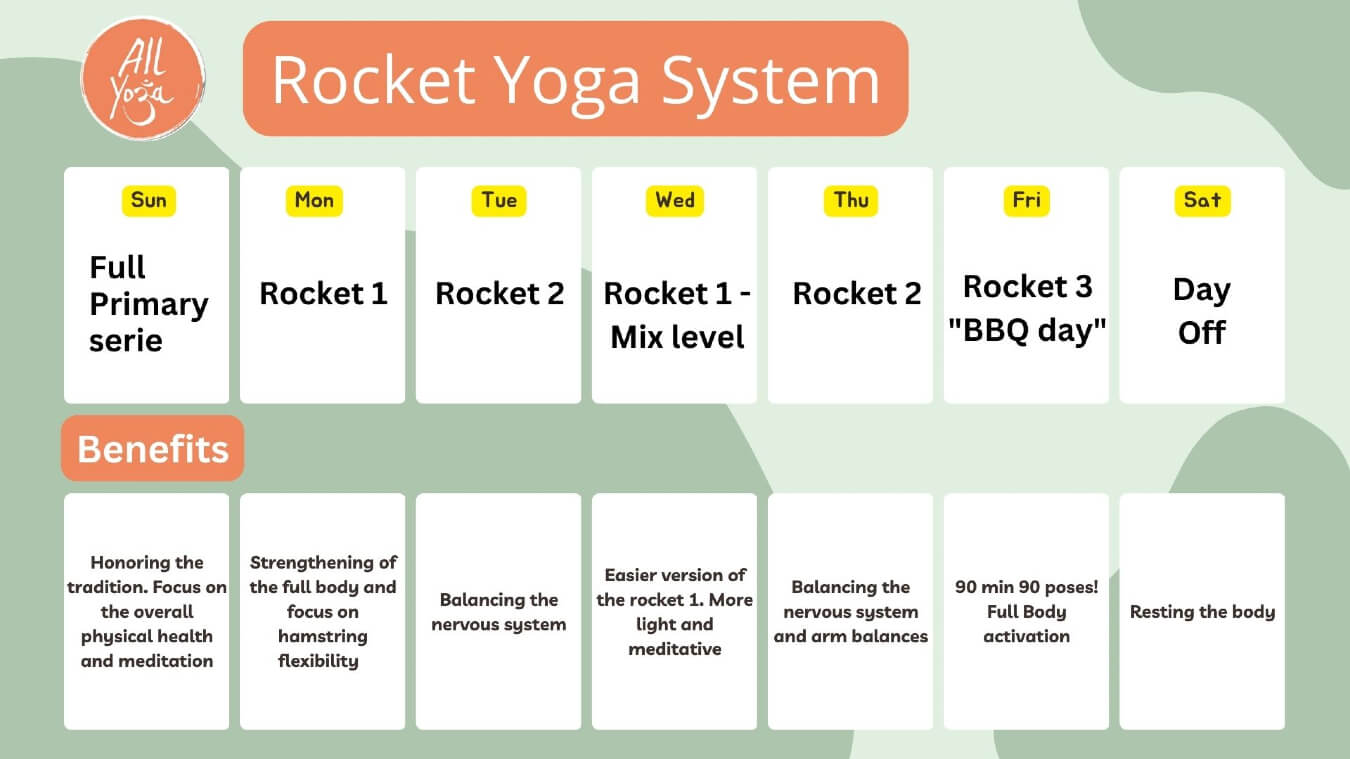
Back in the days, in the bustling city of San Francisco, Larry Schultz revolutionized the yoga scene with his innovative Rocket Yoga classes. Introducing a one-of-a-kind class schedule, he dubbed it the “Rocket Yoga System.” Tailored to each day of the week, these dynamic sequences were designed to provide a truly holistic practice, addressing every aspect of the body while promoting balance in the nervous system and purifying the mind. This unique approach quickly gained traction, captivating countless students and making Rocket Yoga become very popular!
Rocket Yoga Benefits
- Rocket Yoga Keys Benefits
- Build Upper Body strength
- Improve overall flexibility
- Improve cardiovascular health
- Boost lung capacity
- Better mental clarity and focus
- Reduce Stress
- Release body tension
- Increase in energy and vitality
With Rocket being a fast-paced and dynamic practice, it offers a variety of benefits for the body and mind. It helps to build upper body strength and improve overall flexibility and cardiovascular health. The practice requires focus, which improves mental clarity and concentration. As there are several inversions and arm balances in the sequence, it enhances balance and coordination.
The combination of physical movement and focused breathing in Rocket Yoga can help to reduce stress and tension in the body, promoting relaxation and a sense of well-being. Expect an increase in energy levels and overall vitality.
Rocket Yoga places emphasis on the breath, which boosts your lung capacity and overall respiratory function.
6 Tips for Beginners
- If you are new to Rocket Yoga, it is best to start with an “all levels” or “beginner-friendly” class and to work with a qualified teacher who can help you to modify the poses to suit your level of fitness and ability.
- There’s a strong emphasis on the breath, focus on your breath, keep it steady and smooth as you move through the postures.
- It can be fast-paced and dynamic, so it’s important to go at your own pace and not push yourself too hard. Listen to your body and only do what feels comfortable for you.
- If a posture or movement feels too difficult, don’t be afraid to use modifications or props to make it more accessible. Your teacher will offer modifications and variations to help you progress at your own pace.
- Remember that learning Rocket Yoga is a process, and it will take time and practice to develop the strength and flexibility needed to perform the more advanced postures. Be patient with yourself and enjoy the journey. With regular practice, you will soon notice an improvement in your flexibility, strength, and balance, as well as a sense of calm and focus in your mind.
- Most importantly: Have fun!
Rocket Yoga FAQ
What is Rocket Yoga?
Rocket Yoga is a more accessible version of the Ashtanga Vinyasa system, created by Pattabhi Jois. Both of them consist of Sun Salutations, followed by a standing and seated sequence, and finishes with the traditional closing series. Rocket follows a certain structure, however the given sequence can be altered and modified according to the practitioner’s level. It’s a dynamic and fast-paced flow supported by music, with the intent of making the practice a lot of fun.
What is Rocket Yoga good for?
Rocket strengthens muscles and improves balance. Due to its fast-paced nature and usually more being more intense (yet still accessible for all levels) than Hatha or Vinyasa Yoga it can boost cardiovascular health too. Practicing Rocket yoga enhances concentration and reduces stress.
Where can I practice Rocket Yoga?
Rocket Yoga is becoming more and more popular all around the world. Many yoga studios offer classes as part of their regular schedule and often even workshops. Search for local studios that offer Rocket Yoga classes and enrol in one that fits your schedule and level of experience.
How do I become a Rocket Yoga Teacher?
Firstly, attend Rocket Yoga classes by an experienced rocket yoga teacher to build a strong foundation in the Rocket practice. Familiarise yourself with the principles, postures, and sequences of Rocket Yoga. Then look for a reputable Rocket Yoga teacher training programs that is recognised by the Yoga Alliance. All Yoga Training offers a comprehensive Yoga module within theirRocket 300 Hrs Advanced Yoga Teacher Training. You get to practice and learn teaching the three different sequences, learn the “mechanics of flight” complemented by Handstands & Mobility and Anatomy & Physiology.
Want to become a competent and confident Rocket Yoga teacher, capable of sharing the benefits of this practice with others? Click here for more information
Rocket Yoga Infographics
More Rocket Yoga Resources
Searching for somewhere to complete a rocket yoga teacher training is more challenging than one would think… With not many Rocket teacher training schools to choose from, we’ve have cut out the work and research for you. We have narrowed it down to the 10 best Rocket yoga teacher training worldwide.
read moreRocket yoga is a popular and fast-paced and Dynamic style of yoga, that appeals to many – it’s certainly one of our favorite! Looking to try a Rocket Yoga class? We hand picked the best rocket yoga teachers in 2023! The founder of Rocket Yoga , Larry Schultz, was a student of Pattabhi Jois for 7 years and then went onto pass his passion for rocket onto many teachers around the globe.
read moreWe have designed this 300 Hours Yoga Teacher Training specifically for existing yoga teachers who wish to deepen and expand their understanding of yoga. Throughout the first half of the training (15 training days plus days off), the main focus will be Rocket Yoga, complemented by Handstands & Mobility and Anatomy & Physiology.
read moreConclusion
Rocket Yoga is a dynamic and invigorating practice that can offer a wide range of benefits for both the body and mind. Its unique blend of traditional Ashtanga yoga and vinyasa flow, emphasis on inversions and flying poses make it stand out from other styles. Whether you’re a beginner or an experienced yogi, Rocket Yoga is a practice that can be tailored to suit your level of fitness and ability.
Practicing Rocket style can help you to increase flexibility, strength, and balance in the body, while also helping to improve focus and concentration. It’s also a great way to build self-confidence and self-esteem. And if you’re looking to shake up your yoga practice, try incorporating some inversions and flying poses, you will see how much fun it is and how it can benefit you.
But it’s not just about the physical benefits of the practice, Rocket Yoga can also have a positive impact on your mental and emotional well-being. It can be a great tool for managing stress and anxiety, and it can also help you to find a sense of calm and inner peace.
Get Your Free
Rocket Yoga Bundle
About David Adame
 David is a Spaniard that has been living abroad for more than twenty years. He started his yogic journey in Portugal, mostly to complement his career as a professional contemporary dancer. After moving to Thailand in 2009, David was introduced to Ashtanga-vinyasa Yoga where his true yoga identity started to take shape. As a very active person, both mentally and physically, Yoga shows him how to enjoy the stillness and quietness of Life, bringing him balance through daily practice and conscious breathing.
David has had the opportunity to study with a variety of teachers worldwide. His classes are challenging, yet lighthearted, with focus on transformation. When he is not practicing yoga, you can find him reading about anatomy and physiology, nutrition, body and mind connection, and anything involving personal growth. David would like to share the same vitality, happiness and passion with his students the same way he has cultivated his own experience every time he practices yoga.
David is currently one of All Yoga Training's proud lead-trainers. Connect with him through one of our Yoga teacher trainings in Bali and Thailand.

Read More Blogs
Want to Become a Yoga Teacher and/or
Deepen your Yoga Practice?
2 FREE EBOOKS FOR YOU:
- 20 things to know before choosing a yoga teacher training
- 7 tips to deepen your yoga practice right now
Copyright © 2024, All Yoga International ltd. All Rights Reserved
Privacy Policy